Author: grattonw

  • Community forum addresses issues of violence, inequality

    Community forum addresses issues of violence, inequality

    Some members of UD’s Race, Justice, Policy Initiative who attended the forum are, from left, Kassra Oskooii, Yasser Payne, Rita Landgraf, Eric Rise, Karen Parker, Darryl Chambers, Leland Ware and K.C. Morrison.

    The University of Delaware’s Race, Justice, Policy Research Initiative (RJP), which was created to identify and address issues of race and justice that affect Delaware communities, met directly with residents and leaders of some of those communities at an Oct. 18 forum.

    The public event drew participants from UD, government, nonprofit organizations and the Wilmington community to share concerns about such issues as violence and poverty and to lay the groundwork for future collaborations.

    Among the panelists were New Castle County Executive Matt Meyer and Wilmington Mayor Michael Purzycki.

    During the past year, the UD researchers who established RJP have met with numerous state and local policy makers to gather and share information and perspectives. Members of the initiative aim to develop a research agenda they can use to assist the government agencies and community organizations that have been working for years to address issues of race, justice and inequality.

    The forum, held at the Delaware History Museum in Wilmington, consisted of two panel discussions followed by questions and comments from the audience of about 200 community members.

    The panels focused on the high levels of violence, and particularly gun violence, afflicting Wilmington and on possible policy solutions that could be found through collaboration. The forum concluded with a keynote speech that traced the history and impact of mass incarceration.

    In exploring the issue of violence in Wilmington, panelists discussed underlying causes that led to the situation today and difficulties in developing and funding programs to address the problem.

    Yasser Payne, associate professor of sociology and of Africana studies at UD, said the basis of the problem is structural, with a lack of opportunity for too many individuals and communities. He called on the audience to work more aggressively for programs that create opportunity and to take risks in advocating for such efforts.

    Darryl Chambers, a researcher with UD’s Center for Drug and Health Studies, said that as a Wilmington resident and a long-time activist, he has seen a cycle of efforts to combat problems of violence, poverty and inequality.

    He said programs often are implemented and begin to show successful outcomes, but then political changes occur and new leaders stop funding the programs. Later, he said, similar programs might again be launched, “but we’re reinventing the wheel” and losing ground with each interruption and delay.

    “There’s a lack of resources, but there’s also a lack of political will,” Chambers said. “This isn’t just a police problem. This is all of our problem.”

    ​James Forman Jr., author of “Locking Up Our Own: Crime and Punishment in Black America,” gives the keynote address on mass incarceration.

    Panelists discussing possible solutions that could be found by academics, agencies and residents working together focused on violence prevention and on ways for the justice system to function more fairly.

    Kathleen Jennings, chief administrative officer for New Castle County and a former prosecutor and defense attorney, said much of the criminal justice community is “frustrated and angry.” Harsh laws and long prison terms may have been well intentioned initially, she said, but have actually harmed individuals and communities without making neighborhoods safer.

    Delaware is examining its sentencing system in the hope of making changes, she said.

    Ashley Biden, executive director of the Delaware Center for Justice, urged support for children’s services that succeed in creating opportunities that reduce the risk of violence later in life. Early education, adequate numbers of social workers and counselors in schools and truancy-prevention programs are all effective measures, she said.

    Purzycki agreed with other speakers that many neighborhoods have been decimated by the number of adults and teens who are or have been incarcerated. Rehabilitation and help with jobs and services for former offenders are needed, he said.

    The keynote address was given by James Forman Jr., a Yale Law professor and author of Locking Up Our Own: Crime and Punishment in Black America.

    In his talk, he traced the history of the laws that have resulted in so many Americans, especially those who are poor and African American, being imprisoned for long terms.

    The son of two civil rights workers, Forman said he views taking on the issue of mass incarceration as “the civil rights work of my generation.”

    About the Race, Justice, Policy initiative

    The University’s Race, Justice, Policy Research Initiative is composed of experts from the College of Arts and Sciences’ Department of Sociology and Criminal Justice, School of Public Policy and Administration, Legal Studies Program and Center for Drug and Health Studies.

    It was organized to examine and research policy-related questions on race and justice issues.

    Article by Ann Manser; photos by Evan Krape

  • DIVERGING TRENDS

    DIVERGING TRENDS

    The latest data on Delaware substance use shows that while teen marijuana use continues to decline in an era where various states have begun to legalize “pot,” young adult use is rising. Click here to view the report.

  • GRADUATE RESEARCHERS WON THE 2017 ACCCJ OUTSTANDING STUDENT PAPER AWARD

    GRADUATE RESEARCHERS WON THE 2017 ACCCJ OUTSTANDING STUDENT PAPER AWARD

    ​Luye Li and Brandie Pugh won the 2017 ACCCJ Outstanding Student Paper Award for their collaborative paper titled “Understanding of Why Women Stay in Physically Abuse Relationships: A collaborative Study of Chinese and American College Students.”

  • UD researchers join team to assess new state program

    UD researchers join team to assess new state program

    Ann Bell, assistant professor of sociology, is the lead investigator at UD of the study to evaluate the new Delaware-Contraceptive Access Now intervention.

    Researchers at the University of Delaware have been selected to work with colleagues at the University of Maryland to evaluate the Delaware-Contraceptive Access Now (DEL-CAN) intervention.

    In February, Delaware Gov. Jack Markell and the organization Upstream USA announced the launch of DEL-CAN, financed with private funding of $10 million.

    The goal, Markell said, was to ensure that all women, regardless of their insurance status or where they received their health care, have same-day access to a full range of contraceptive methods at low or no cost. The announcement of the initiative noted that Delaware’s rate of unplanned pregnancies, 57 percent, is among the highest in the nation.

    The evaluation of DEL-CAN will be conducted over five years by a multi-institution research team, through a contract funded by a private foundation.

    The mixed-methods project will evaluate DEL-CAN according to its aims of: reducing unintended pregnancies; reducing Medicaid costs for unintended pregnancies; and supporting policy development that enables contraceptive access for all women who want it.

    The evaluation will address both the intervention’s effectiveness and the underlying mechanisms of change brought about by it. The goals of the evaluation are to understand the extent of the initial and sustained impacts in Delaware and the degree to which these impacts may be generalizable to other states.

    At UD, the Department of Sociology and Criminal Justice, the Center for Community Research and Service (CCRS) and the Center for Drug and Health Studies (CDHS) will contribute research expertise and data coordination with Delaware state agencies.

    Faculty members at UD who are participating in the evaluation are Ann Bell, assistant professor of sociology and lead investigator of the evaluation at UD; Steven Peuquet, CCRS director and associate professor of public policy and administration; and Steve Martin, CDHS senior scientist.

    Michael Rendall, director of the Maryland Population Research Center and professor of sociology at the University of Maryland, is the principal investigator of the evaluation.

    At the University of Maryland, College Park, the study will comprise efforts from faculty in sociology, the Joint Program in Survey Methodology, and Economics in the College of Behavioral and Social Sciences, and faculty in Health Services Administration and Family Science in the School of Public Health.

    The University of Maryland Baltimore County’s Hilltop Institute will coordinate comparisons of Maryland and Delaware Medicaid-eligible women.

  • BATTLING ELDER ABUSE

    BATTLING ELDER ABUSE

    BATTLING ELDER ABUSE

    Article by Nora Riehl Zellik Photo by Evan Krape May 20, 2016

    UD hosts conference on elder abuse and exploitation

    Last week’s Elder Abuse and Exploitation Conference drew professionals, advocates and concerned individuals from across Delaware and the region with the goal of better understanding elder abuse.

    Hosted by the University of Delaware’s Center for Drug and Health Studies (CDHS) in partnership with the Division of Professional and Continuing Studies, the May 12 event focused on multidisciplinary approaches for addressing elder care and elder justice issues.

    “We’ve all heard that it takes a village to raise a child; it also takes a village to prevent and address elder mistreatment and exploitation,” said conference organizer Sharon Merriman-Nai, associate scientist at CDHS. “More than one in 10 older adults will experience abuse, neglect, exploitation or self-neglect, and the consequences of mistreatment are dire: poorer quality of health, poorer quality of life, loss of independence, loss of financial stability, and for some, even premature death. We all have a role to play, and need to understand how our roles interlock.”

    The event featured several nationally known speakers, including Elizabeth Loewy, general counsel and senior vice president at EverSafe, a technology company focused on the prevention of financial exploitation and identity theft in later life.

    Formerly the chief of the New York County district attorney’s elder abuse unit, Loewy successfully prosecuted the complex and highly publicized financial exploitation case involving philanthropist and socialite Brooke Astor.

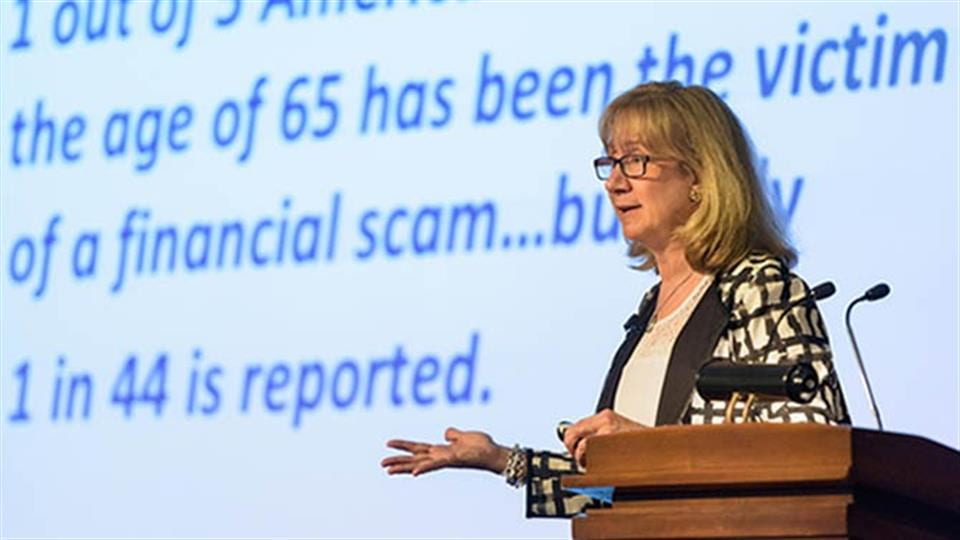
    Recounting several high-profile elder abuse cases she helped prosecute, Loewy characterized elder financial abuse as an “invisible epidemic,” with statistics showing that while one out of five Americans over the age of 65 experience financial abuse or scams, only one in 44 cases is reported, due to a variety of circumstances including guilt, shame, economic dependence, fear of isolation and cognitive challenges.

    Among Loewy’s cases was the widely covered financial exploitation case involving socialite Brooke Astor, affectionately known as “New York’s first lady of philanthropy.” The story was chronicled nationally by the press with events culminating in a six-month criminal trial and conviction of Astor’s son and one of her lawyers for charges that included grand larceny and forgery relating to Mrs. Astor’s estate.

    Featured speaker Philip Marshall, historic preservation professor and grandson of Brooke Astor, movingly shared his family’s experiences. In 2006, after years of increasing concern over his father’s handling of Mrs. Astor’s finances, Marshall, with the help of others, sought a petition for guardianship for his grandmother and eventually became involved in the battle over his father’s actions.

    “My grandmother would never want to be known as one of America’s most famous cases of elder abuse,” said Marshall. “Yet, the sad circumstances surrounding my grandmother have informed a timely, and timeless, cause in elder justice.”

    Marshall cited the cooperation and teamwork of caring friends and caregivers as the key factor in their ability to ultimately provide the oversight, care and living arrangement that his grandmother had wished for. “Her abuse galvanized a collective response by family, friends, staff, and caregivers all united by compassion and a common cause. The strength of our diversity contributed much to our success, and I later learned this was an informal ‘multi-disciplinary team.’”

    Added Marshall, “Once we took action, it was clear that we were addressing a much greater, national issue,” commenting that at age 104, his grandmother “unknowingly entered her ‘encore career’ as an advocate for elder Americans.” Marshall has testified before the U.S. Senate Special Committee on Aging and delivers keynote addresses across the country, focusing on awareness and prevention, supportive decision making and elder financial protection.

    UD’s Karen Stein, associate professor in the School of Public Policy and Administration and a nationally recognized leader on elder abuse issues, was a conference organizer and featured speaker.

    Commenting on both the current and future environment for serving Delaware’s older and vulnerable populations, Stein observed, “If we apply the national statistics to Delaware population numbers, it’s possible that 17,200 older Delawareans are at risk for abuse, neglect or exploitation but only 1,200 cases may come to the attention of authorities.”

    “However, there are new developments unfolding that hold promise for substantially increasing our knowledge of the known world of elder abuse,” said Stein. “Federal attention to elder justice has never been at a greater level; federal funding is moving away from demonstration projects towards outcomes-based research to find out what really works; and the research community is coalescing around methodological and ethical standards to advance large-scale experimental studies.”

    The conference featured a wide array of panel discussions and presentations from stakeholders and experts from across Delaware, including presenters from the Delaware Attorney General’s Office, Department of Health and Social Services, UD faculty and the private sector.

    Delaware Secretary of Health and Social Services Rita Landgraf was a featured speaker, discussing trauma-informed health and social care initiatives that are being implemented or are emerging in the region to address the needs of older patients and clients.

    Presenters representing the University of Delaware included Veronica Rempusheski, the Jeanne K. Buxbaum Chair of Nursing Science and professor of nursing, leading a session on “Nurses’ Roles and Responsibilities Pertaining to Elder Abuse.” Karla Bell, assistant professor of physical therapy and director of clinical education, joined by Rempusheski and others, served as panelists in the event’s closing forum, “Solving the Puzzle: Working Together to Prevent Elder Abuse.”

    When closing her remarks, Elizabeth Loewy asked, “Is there any good news?”

    She pointed to the positive outcomes and remedies achieved in criminal court, also citing multidisciplinary teams, civil and criminal litigation, education efforts aimed at consumers, law enforcement and the community; and prevention through technological innovation as instrumental in the future effectiveness of addressing elder abuse and elder justice issues.

    For more information about speakers and topics, visit the conference website.

  • RATLEDGE FAMILY AWARD

    RATLEDGE FAMILY AWARD

    1:05 p.m., May 6, 2016–The Ratledge Family Award for Delaware Public Service has been presented to three members of the University of Delaware community – Darryl Chambers, James Flynn and Joanne Whalen – for their contributions to the well-being of the people of the state.

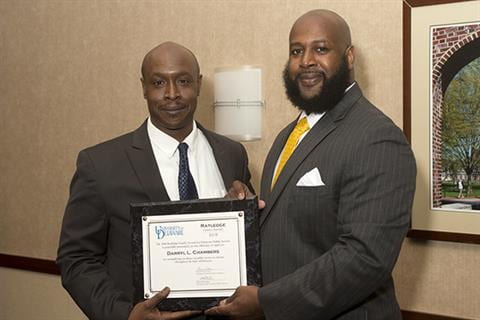
    Yasser Payne (left) presents the award to Darryl Chambers.

    The recipients were honored during a ceremony April 28 at Marriott’s Courtyard Newark-University of Delaware campus hotel.

    Darryl Chambers

    Chambers, a graduate research associate in the Center for Drug and Health Studies who is pursuing a doctorate in criminology, was honored for his work with local, city and statewide community-oriented programs.

    As a member of the Wilmington HOPE Commission Street Outreach Program, he worked to improve quality of life and reduce crime and violence in communities in the city. He was lead associate researcher on the Wilmington Street Participatory Action Research Project, in which members of a population under study conduct research in and on their own communities.

    In 2014, Gov. Jack Markell appointed Chambers to serve on the Wilmington Public Safety Strategies Commission, working to conduct an examination of public safety strategies in the city.

    Chambers is the executive director of the Youth Empowered to Strive and Succeed Program, which has as its mission is to provide youth with quality education regarding drug and alcohol prevention, gang and gun violence, and issues related to fatherhood and family reunification. 

    He was recognized at the Ratledge Family Award ceremony by Yasser Payne, associate professor in the Department of Black American Studies.

    James Flynn

    Flynn joined UD’s human resources team in 1979, and now serves in the Institute for Public Administration in the School of Public Policy and Administration (SPPA). As an assistant professor in SPPA, he served as the director of the master of public administration (MPA) degree program and SPPA’s internship program.

    Flynn has worked on projects ranging from strategic planning to education policy to local government training programs. He served as project manager for the Blue Collar Task Force, a joint executive and legislative initiative authorized by the 147th Delaware General Assembly, and led a team that facilitated a series of task force meetings and statewide public hearings to examine the state’s unemployment rates, climate for long-range business growth, and workforce-readiness strategies. 

    Flynn’s impact on the community is also demonstrated through his management of six superintendent searches for the state’s school districts. This role required him to tap his professional background in human resources to create an impartial application and selection process to identify candidates with the skills and experience to lead. 

    Also, he served as a project team member to provide support to the Delaware Youth Opportunities Initiative’s working group. This work contributed to Delaware House Bill 163, designed to assist older teenagers transitioning to adulthood as they “age out” of foster care. 

    He was recognized by Jerome Lewis, director of the Institute for Public Administration.

    Joanne Whalen

    Whalen joined the University in 1979 as an associate in Cooperative Extension’s Integrated Pest Management (IPM) Program. She became the Extension IPM coordinator and Extension entomologist for agriculture in 1983. 

    Whalen, who received her master’s degree in entomology and wildlife ecology from UD in 1983, has served on statewide, regional and national committees. She is a current member and past chair of the Northeast Region’s Technical Committee on Integrated Pest Management, responsible for improving communication and cooperation throughout the region. 

    As a past member of the International Certified Crop Adviser Exam Committee and current Mid-Atlantic Certified Crop Adviser Board member, she has worked to establish base standards of knowledge and continuing education for individuals who advise growers on crop and pest management practices. 

    As the Extension IPM coordinator, she focuses on developing and delivering recommendations that have both economic and environmental benefits. She conducts research and extension programs that educate agricultural clientele on a range of practices including the use of cover crops, reduced tillage, conservation biological control, trap cropping, insecticide resistance management and the proper use of insecticides to manage insect pests in crops.

    She was recognized by Michelle Rodgers, associate dean of the College of Agriculture and Natural Resources and director of Cooperative Extension.

    George Watson, dean of the College of Arts and Sciences, presented welcoming remarks, and Mark Rieger, dean of the College of Agriculture and Natural Resources, closed the program. Dan Rich, University Professor of Public Policy, presented a talk on the value of community engagement.

    About the Ratledge Family Award

    The Ratledge family, Delawareans who can trace their roots back to the 1700s, established the award to encourage and recognize significant public service contributions with at least one award of $1,000 made each year.

    Recipients of the award must be members of the UD community. Professional staff, faculty and students are eligible.

    Preference is given to members of the School of Public Policy and Administration and the College of Agriculture and Natural Resources.

    The award is presented to those who exemplify excellence in public service to citizens in the state, and those contributions are defined to include both paid and volunteer work.

    Photos by Duane Perry

  • DATA POINTS TO YOUTH WITH INCARCERATED PARENTS AT DISPROPORTIONATE RISK

    DATA POINTS TO YOUTH WITH INCARCERATED PARENTS AT DISPROPORTIONATE RISK

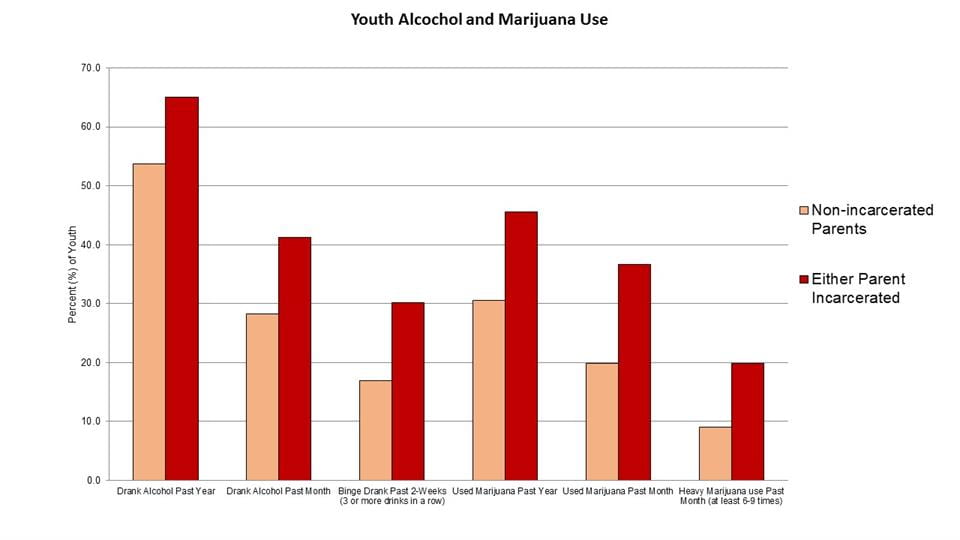
    Researchers at CDHS analyzed data from the 2014 Delaware School Survey and found that 11th graders that have had at least one parent who is incarcerated were more likely to have: used alcohol and marijuana within the past year; used alcohol and marijuana within the past month; engaged in binge or heavy use of alcohol and marijuana compared to 11th graders who did not have an incarcerated parent. Youth with incarcerated parents were also more likely to have had problems in school as well as more instability in food and housing compared to youth without incarcerated parents (not shown in chart). The unique needs of youth with incarcerated parents present opportunities for community outreach and support to address these areas of risk and instability.

    Data from Delaware School Survey, 2014
  • New campus coalition formed to address alcohol, drug abuse

    New campus coalition formed to address alcohol, drug abuse

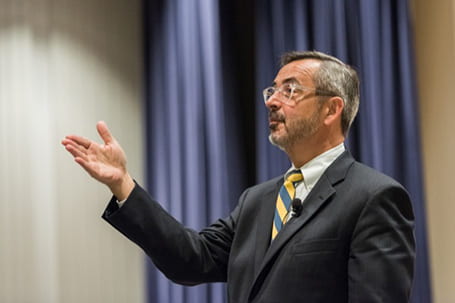
    Provost Domenico Grasso, shown here speaking at a recent event, has charged the Campus Coalition with addressing issues of alcohol abuse and underage drinking.

    The Campus Coalition for Alcohol and Other Drug Abuse Prevention held its inaugural meeting in spring 2014 to begin expanding and advancing alcohol prevention initiatives at the University of Delaware.

    The coalition, co-chaired by Dawn Thompson, vice president for Student Life, and Nancy Chase, director of Student Wellness and Health Promotion, was charged by Provost Domenico Grasso with providing visible, vocal and visionary leadership regarding student drinking and the University’s position regarding it. 

    Acknowledging that there is no “silver bullet” or right answer for resolving the issues of alcohol abuse and underage drinking on college campuses, Grasso said that the goal of the coalition is to encourage responsible drinking among students who can legally drink and to minimize the risks of drinking for all UD students.

    “The coalition is a campus-wide initiative engaging faculty, staff and students from all corners of the UD community in the development of practices that will help reduce the risks associated with alcohol and other drug abuse,” Thompson said. “The formation of the coalition reflects the institution’s commitment to the safety and success of our students.” 

    Chase added, “The coalition will provide oversight to ensure that institutional concerns about substance abuse are addressed in a comprehensive manner and that University efforts are modeled after evidence-based, promising practices within the discipline of college health promotion.” 

    Changing the culture

    “According to the National Institute on Alcohol Abuse and Alcoholism (NIAAA), having a functioning campus community coalition for substance abuse prevention is a best practice in college alcohol and drug prevention efforts,” said Chase.

    NIAAA is one of the 27 institutes and centers that comprise the National Institutes of Health (NIH). NIAAA supports and conducts research on the impact of alcohol use on human health and well-being. 

    Through its work, the NIAAA Task Force developed a “3-in-1 Framework” strategy showing that effective interventions need to occur simultaneously at three distinct levels — individual, student body and community — for optimal success.

    “We would be remiss if we did not form a functioning coalition to address our prevention efforts both on campus and in the greater Newark community,” Chase said. “This group will eventually be expanded in thoughtful ways to bring in key representation from our community partners, so that efforts which will span the entire environment in which our students live and our institution functions can be implemented for their maximum preventative reach.” 

    Engaging in ongoing conversations

    Goals of the coalition include familiarizing the campus community with the factors associated with excessive drinking and identifying and implementing environmental management strategies to address these factors.

    “One specific goal of the coalition will be to encourage more attention to these issues by simply keeping campus stakeholders more regularly informed about the issues which emerge as a result of students’ risky substance use, particularly drinking,” Chase said. “We will be utilizing many means to keep campus stakeholders engaged in the ongoing conversation about how we all can work together to shape a safer and healthier campus environment for all our community members, especially our students.” 

    The offices of the President and the Provost will be kept apprised of the coalition’s progress, Thompson said. 

    Current initiatives

    In 2011, Student Wellness and Health Promotion was awarded a Strategic Prevention Framework State Incentive Grant (SPF-SIG) to implement a community-based effort to prevent underage and binge drinking among 12-25 years olds.

    As a result of the funding, Student Wellness and Health Promotion launched initiatives that support the six prevention strategies established by the Center for Substance Abuse Prevention: information dissemination, education, alternative activities, community based processes, problem identification and referral, and environmental changes.  

    The grant is part of a five-year cooperative agreement between the Substance Abuse Mental Health Services-Center for Substance Abuse Prevention and the Office of the Governor.

    About the Division of Student Life

    The Division of Student Life supports the educational mission of the University through student advocacy, innovative services and programs that promote student learning, personal development and well-being, and academic success. The division fosters inclusive communities, facilitates student engagement and leadership development, and promotes responsible citizenship.

    About Student Wellness and Health Promotion

    Student Wellness and Health Promotion, a department within the Division of Student Life, works to engage all members of the University community in health promotion and prevention strategies that empower students to develop skills and competencies that support healthy choices and academic success as a foundation for lifelong development.

  • UD research informs treatment policy for inmates

    UD research informs treatment policy for inmates

    Dr. Christine (Christy) Visher, Center for Drug & Health Studies has completed a 5-year study of the HIV prevention/treatment for those in correctional facilities as they transition back into society and continue with their medications and support.

    A national, five-year study of care for inmates with HIV brought strangers together, produced policy change in the Delaware Department of Correction and documented the importance of good communication and coordinated care for those who return to the community. But many challenges remain in preventing, detecting and treating HIV in offender populations.

    Christy Visher, director of the University of Delaware’s Center for Drug and Health Studies, and her research team – Steven Martin, associate director, Daniel O’Connell, scientist, and several graduate students from the Department of Sociology and Criminal Justice – collaborated with eight other research centers on the study, which was supported by the National Institute on Drug Abuse.

    Results of that work and recommendations from work with service providers in Delaware’s correctional system and community treatment centers have been published in a series of reports, including a Delaware case study in the April issue of The Journal of Correctional Health Care.

    Researchers in these studies are looking for ways to get effective HIV programs and interventions out of the laboratory of controlled studies and into real-world practice. That kind of systemic change is often difficult, especially in a high-turnover system where training time is limited and other demands press in.

    The stakes are high, though, and researchers agree that critical gaps in care and treatment exist, especially when inmates are released from custody.

    Improving HIV services and treatment for inmates is considered a significant public health concern. Inmates are considered at high risk for HIV, the virus that causes AIDS, and its prevalence among inmates is more than twice that of the general population. 

    Poor or inconsistent follow-up after release can mean disastrous consequences. Researchers in these studies were testing ways to sustain prevention efforts, testing and treatment for those transitioning into the community.

    According to figures from the Bureau of Justice Statistics (BJS), about 1 percent of the nation’s 2.2 million inmates had HIV/AIDS in 2012, the most recent figures available. Testing requirements and treatment vary from state to state, but a BJS report published in February found that many with HIV get treatment with anti-retroviral drugs while they are incarcerated – about 84 percent in state and federal prisons, about 66 percent in local jails. 

    But those drugs must be used consistently and must be continued after release. If the patient has no further treatment or fails to take the medication, “they not only get sicker but the drugs can stop working,” Visher said.

    Delaware usually has between 81-90 inmates with HIV, said Jim Welch, chief of DOC’s Bureau of Correctional Healthcare Services.

    The medication averages about $2,600 per month per inmate, he said. In December, the total cost of HIV medication came to $221,718.

    Ensuring those medications are having meaningful impact and are not just discontinued upon release is an important part of the inmate’s health and an important part of using resources wisely.

    Visher’s research team focused on treatment protocols, especially on establishing a “change team” that included corrections employees and community clinic employees. Those working in the institutional setting met with those working in the community.

    As a result, efficiencies were identified, better understanding emerged of the challenges faced on both sides of the fence, and recommendations were developed to improve services and care.

    The community treatment participants came from Christiana Care Health System’s HIV Wellness clinic in Wilmington, which has about 900 clients on a regular basis, Visher said.

    Those meetings were enlightening to both sides, Visher said, but she does not know if the connections and changes they produced are sustainable. When key people are promoted or transferred or contracts change, and new staff members are not up to speed on the importance of the follow-up, information can be lost.

    “We’ve had a couple different contractors,” Welch said, “and every time we have a new contractor there are a lot of people coming in and out of the system. Sometimes it’s difficult to make sure all the infectious control nurses are up to speed on what happens.”

    The Christiana Care community clinics around the state are more consistently staffed, he said, and that partnership has been solid for 25 years.

    “The challenges there are the same as many other states have – how do you make sure people show up?” he said.

    Some recent changes were written into DOC policy and now appear on forms and other procedural documents, making it much more likely that those changes will survive personnel changes, said Arlene Bincsik, director of the clinic for Christiana Care.

    The relay of information is a critical factor in caring for this population, she said.

    “Delaware’s HIV epidemic has had a tremendous impact on patients who are traditionally medically underserved,” she said. “Seventy percent are minorities, many have a high degree of health illiteracy, mental health problems, substance abuse problems, and consequently have contact with core institutions in our state.”

    When information is inadequate, it can affect care in significant ways.

    Historically, for example, there has been no mandatory HIV testing for those entering the corrections system. If an inmate doesn’t alert officials, the health care team won’t know that person has AIDS.

    As a result of the “change team” discussions, a question now has been added to the intake questionnaire, asking the new inmate if he or she wanted to be tested for HIV. Testing has increased as a result, nurses say, and that leads to more effective care and greater continuity of treatment.

    “The second part of that process is sharing information with the patient or inmate’s permission so that the provider in the correctional setting knows what treatment they are on, what is working and what isn’t,” Bincsik said. “If they are being released, information has to flow both ways. I think this part – facilitating the information – is what was really significant. We had tried to implement improvements with the Department of Corrections but nothing ever stuck. We feel that the involvement of the University of Delaware and the formalized process helped.”

    DOC nurses and staff were supportive of the efforts and the goals behind them, and that approach makes this work better, too.

    “When things work properly, the continuity is extremely tight,” said Karen Swanson, clinical nursing coordinator for the Christiana clinic. “The patients do not miss medications if we’re aware of what medicines they were on. It really does work and it has improved the continuity of patients’ care.”

    The method used by Visher’s team – recruiting change team members from both service areas – was productive in this case, all sides said.

    But will that catch on? Will it survive other pressures and changes within the criminal justice and community health systems?

    “The research enterprise helped activate this,” Visher said, “but can this be done without research? It takes a very strong administrator to say, ‘I’ve read about this. This is the problem and this is how we’re going to solve it.’”

    Vish

    er joined the University of Delaware faculty in 2008 after working as a senior scientist for the U.S. Department of Justice and a senior associate with The Urban Institute in Washington, D.C. Her research has covered many aspects of criminal justice and substance abuse.